

Augmenting Trust in eIDAS with PrivID
A New Era for Digital Identification

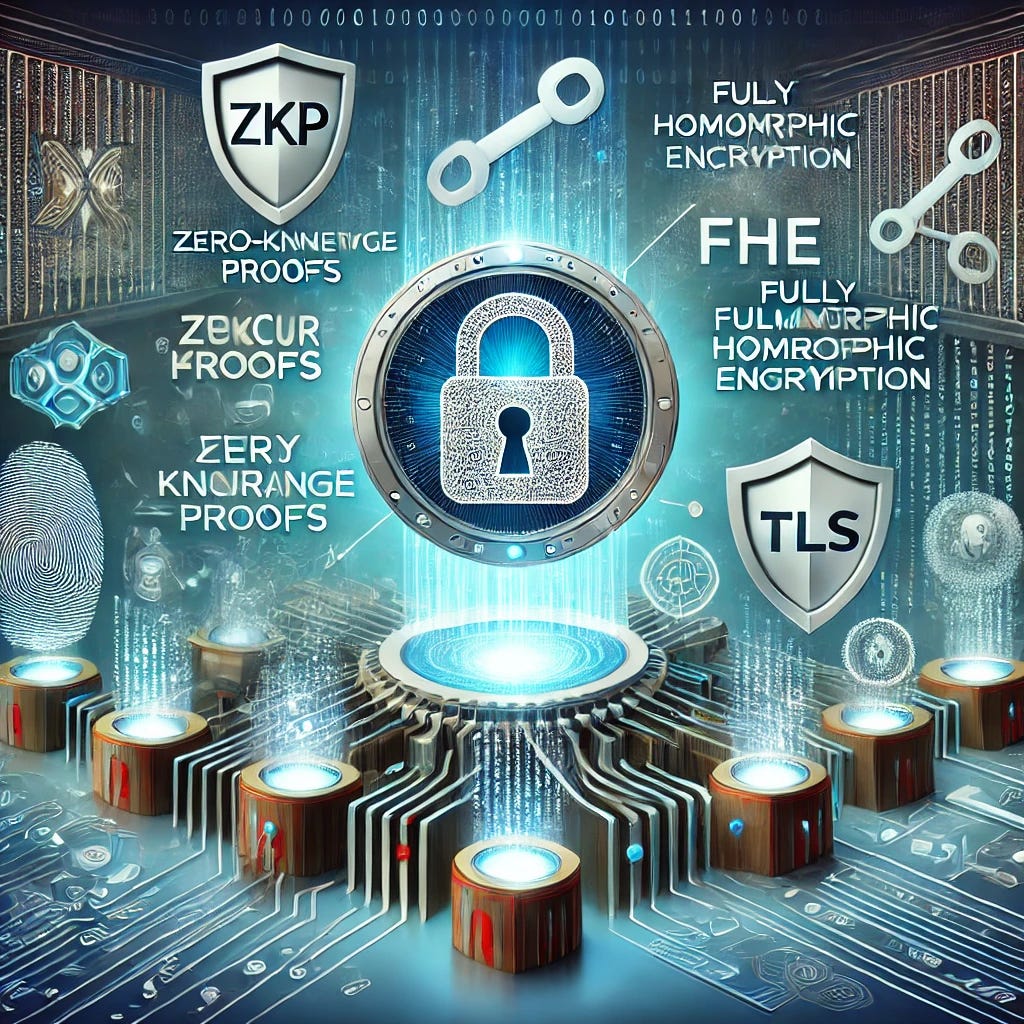
Image created with OpenAI/DALL-E
The European Union's eIDAS regulation (electronic IDentification, Authentication, and trust Services) is a way to establish a standardised framework for electronic identification and trust services across member states. While eIDAS has already made significant strides in facilitating secure cross-border electronic transactions, emerging technologies like Zero-Knowledge Proofs (ZKP) and Fully Homomorphic Encryption (FHE) can further enhance its privacy and security aspects. This article explores how PrivID can augment trust in eIDAS by providing more advanced cryptographic capabilities.
The Current State of eIDAS and Its Limitations
eIDAS was established to create a foundation for secure electronic transactions and facilitate digital interactions within the EU. The regulation emphasises the need for reliable electronic identification systems, digital signatures, seals, timestamps, and other trust services to enable cross-border legal recognition. However, challenges still persist:
Vulnerability to Evolving Threats: The eIDAS framework's reliance on traditional encryption and security protocols like TLS (Transport Layer Security) has limitations in addressing evolving cybersecurity threats.
Data Privacy Concerns: With increasing concerns over data privacy, the existing methods may not fully prevent metadata leakage or protect data at a granular level.
Quantum Threat Preparedness: Current encryption methods may not provide sufficient protection against future threats posed by quantum computing.
Enhancing eIDAS
PrivID uses cutting-edge cryptographic solutions, such as ZKP and FHE, to offer a more robust approach to securing electronic identities and trust services. Here’s how it can address the limitations of the existing eIDAS framework:
1. Enhancing Data Security Through Zero-Knowledge Proofs
ZKPs allow one party to prove the validity of a statement without revealing any underlying data. In the context of eIDAS:
Secure Verification: ZKP can be used to verify identities and authenticate electronic signatures without exposing sensitive information. This can greatly enhance privacy protections compared to current methods where some metadata exposure is inevitable.
Privacy-Preserving Transactions: By utilising ZKP, digital transactions across borders can be conducted securely without the need to share personal information unnecessarily. This reduces the risk of data breaches and helps companies comply with strict privacy regulations such as GDPR.
Streamlining Cross-Border Authentication: ZKP enables frictionless authentication across different jurisdictions by providing a consistent verification mechanism that doesn’t require direct data sharing. This improves user experience while ensuring high security.
2. Protecting Data in Use with Fully Homomorphic Encryption
Fully Homomorphic Encryption allows computations to be performed on encrypted data without needing to decrypt it first, maintaining data confidentiality throughout processing. In an eIDAS-enhanced environment, PrivID’s FHE can:
Provide End-to-End Encryption for Trust Services: With FHE, data can remain encrypted during the entire process of electronic signing, sealing, or verification, mitigating risks associated with data exposure during processing.
Support for Cloud-Based Applications: Organisations can leverage cloud-based services for storing and processing electronic signatures without compromising data privacy. FHE ensures that data processed in the cloud is always encrypted and inaccessible to unauthorised parties.
Address the Quantum Computing Threat: As quantum computing evolves, traditional encryption methods may become vulnerable. FHE can incorporate quantum-resistant algorithms, providing a future-proof approach to secure trust services.
3. Reducing Dependency on Traditional Secure Channels (TLS)
Article 45 of the eIDAS regulation emphasises the need for secure communication channels, such as TLS, to protect the integrity and confidentiality of data in transit. However, TLS has been associated with various vulnerabilities that could be exploited. PrivID can eliminate the need for such reliance by:
Securing the Data at the Source: With ZKP and FHE, data security focuses on encrypting and verifying the data itself rather than merely protecting the channel. This approach reduces the attack surface and enhances data confidentiality.
Eliminating Channel Security Requirements: By securing data through advanced encryption, organisations can shift from relying on traditional secure channels to embracing a model where the data is inherently protected, thus rendering Article 45 requirements less relevant.
4. Augmenting Trust Across Multiple Jurisdictions
Trust is a crucial to eIDAS, and with PrivID's approach, trust can be strengthened across different jurisdictions in the following ways:
Uniform Security Standards: PrivID can provide a unified approach to data encryption and verification across the EU, ensuring consistent security measures regardless of local infrastructure variations.
Interoperability with Different Digital Identity Schemes: The flexibility of ZKP and FHE allows seamless integration with various national digital identity systems, facilitating cross-border recognition and compliance.
Granular Access Control for Sensitive Information: With PrivID, organisations can implement more granular access policies where data can only be decrypted or accessed by authorised parties, providing a higher level of data protection compared to existing practices.
Addressing Future Challenges with a Modern Approach
The evolution of digital threats and advancements in computing technology require a forward-thinking approach to trust services. PrivID’s technology addresses this by:
Preparing for Post-Quantum Cryptography: As quantum computers become more capable, traditional encryption methods may be compromised. PrivID's FHE and ZKP are equipped to integrate quantum-resistant algorithms, future-proofing digital trust services.
Simplifying Compliance with eIDAS: PrivID’s encryption provides a strong and consistent framework for ensuring compliance with eIDAS across member states, potentially reducing the regulatory burden on businesses.
PrivID offers a new way to look at enhancing the eIDAS regulation by addressing its current limitations and preparing for future challenges. By integrating ZKP and FHE, PrivID not only augments trust in electronic identification and trust services but also ensures that digital interactions remain secure, private, and resilient against evolving threats. As the EU continues to refine its digital identity framework, adopting modern cryptographic approaches like those developed by PrivID could be crucial in shaping a more secure and unified digital future.
References
eIDAS Regulation Overview. European Commission. Link
Zero-Knowledge Proofs: Enhancing Privacy in Digital Identity. A. Narayanan, et al., ACM Computing Surveys.
The Future of Cryptography in a Quantum World. National Institute of Standards and Technology (NIST). Link
Fully Homomorphic Encryption: New Frontiers for Data Privacy. IEEE Security & Privacy Magazine.