


The UK's Demand for iMessage Backdoors Puts Everyone at Risk—Here’s Why That Matters to You
Imagine This…
Your company just closed a massive deal with a European defence contractor. Sensitive contract details, financials, and proprietary IP were discussed over encrypted messaging apps. You thought your conversations were private—after all, end-to-end encryption (E2EE) ensures only the sender and receiver can see the messages.
Now, imagine waking up to find that a foreign government—or worse, a cybercriminal group—has accessed that very sensitive information because a government-mandated backdoor let them in.
This isn’t science fiction. It’s the direct consequence of the UK’s recent push to weaken encryption in services like iMessage. Is this a ‘chicken little’ thing? After all it’s been tried by governments before, the US tried it, it’s been tried by various EU governments (granted those were under the auspices of CSAM), but the point is the arguments tend to be the same, it’s for your protection. And if this policy succeeds, every business, journalist, activist, and private individual worldwide will face the same catastrophic security risks.
After all it’s been tried by governments in the past under the idea of protecting children or national security. The UK's Online Safety Act pushes for scanning encrypted messages, the US tried using CSAM as a justification for the EARN IT Act, Australia passed laws forcing companies to provide access via the Assistance and Access Act, and the EU has proposed similar measures under its CSAM Regulation.
End-to-End Encryption
E2EE ensures that messages remain locked away from prying eyes—not just from hackers but also from service providers, corporations, and even governments. It’s a fundamental security layer used by individuals, businesses, and critical industries to protect sensitive data.
Without strong encryption:
Trade secrets and financial data become exposed
Privileged legal communications are no longer private
Cybercriminals gain new attack vectors
Governments could use mass surveillance to track conversations
For companies handling financial transactions, M&A discussions, military contracts, and intellectual property, weak encryption isn’t an option—it’s a real and existential threat.
A Precedent No Business Can Afford
Under the UK’s Online Safety Act, tech companies are being pressured to introduce mechanisms for government access to encrypted communications. Apple, faced with these demands, has openly resisted, stating it would rather remove iMessage from the UK than compromise its encryption.
Why? Because a backdoor for one is a backdoor for all. The moment an encryption system is weakened—no matter the reason—it ceases to be secure. Cybercriminals, rogue states, and corporate spies will exploit the same backdoors designed for law enforcement.
Imagine Russia, China, or North Korea gaining access to corporate communications because of a government-mandated backdoor. That’s the global security nightmare the UK is now making possible.
For those in the back:
Because a backdoor for one is a backdoor for all.
PrivID: No Compromise Encryption
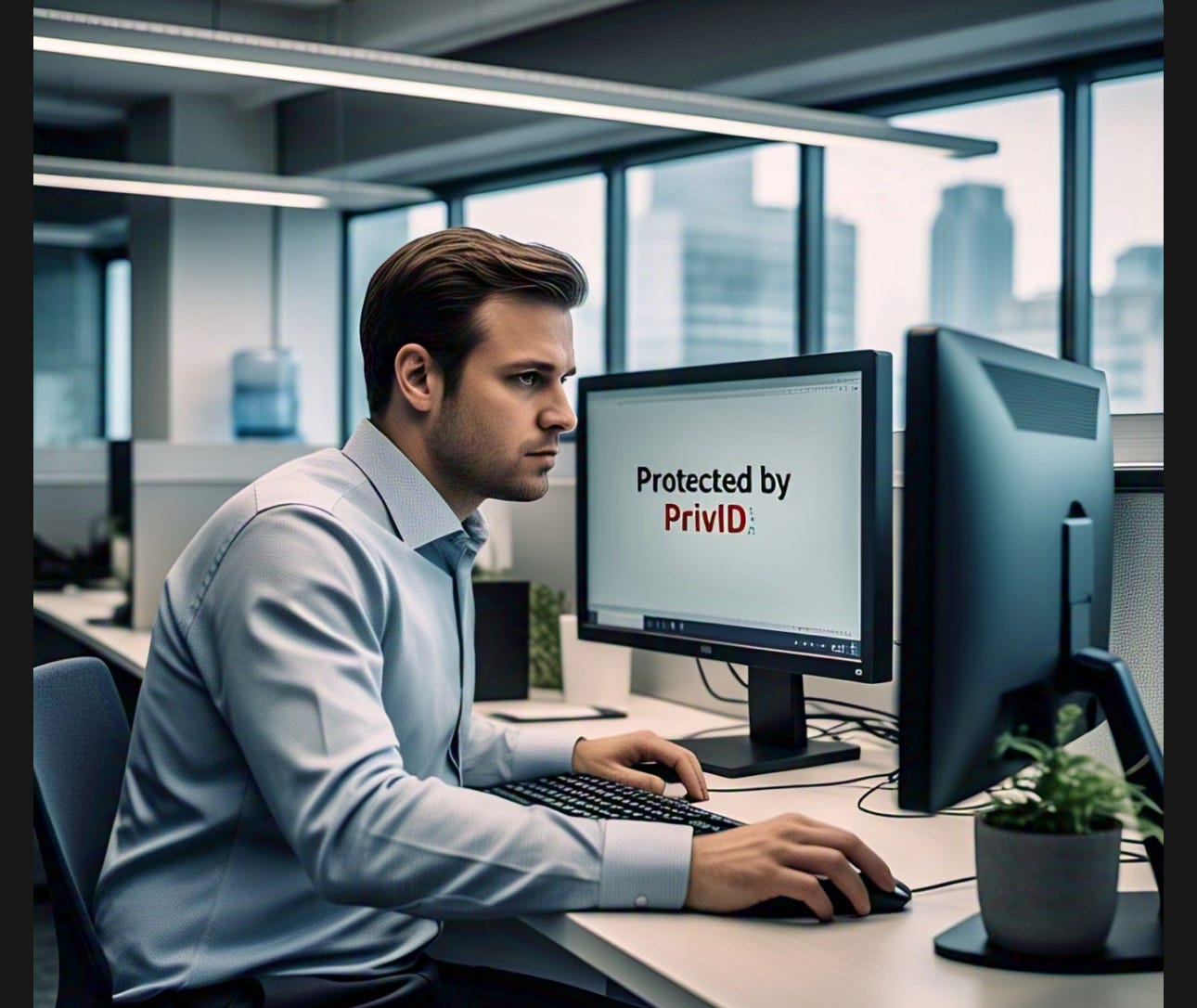
At PrivID, we take a different approach—one that guarantees security without creating government backdoors.
How PrivID Protects Businesses and Individuals
Zero-Knowledge Proofs (ZKP) for Authentication – Users can prove their identity without exposing credentials, eliminating weak points for attackers.
Fully Homomorphic Encryption (FHE) for Data Processing – Unlike traditional E2EE, which only secures data in transit, PrivID allows encrypted data to be processed without decryption—meaning data remains secure even during computation.
Mathematical Security Guarantees – Unlike traditional encryption, which relies on trust in providers, PrivID’s models offer provable security resistant to quantum computing threats.
No Government Backdoors—Ever – Our encryption model is designed to be mathematically secure, meaning no government or organisation can force privileged access.
This means that even if laws change and governments demand access, PrivID’s architecture ensures that there is nothing to give them.
Why Companies Should Reject Weak Encryption
If the UK succeeds in forcing backdoors into encryption, it will fundamentally reshape the business landscape, making corporate espionage, cybercrime, and legal risks more prevalent than ever.
Your Business Needs Strong Encryption NOW:
Financial Risks: The average cost of a data breach exceeded USD4.5 million in 2024. Weak encryption makes breaches more likely.
Corporate Espionage: Competitors and state-backed actors actively target weak encryption to steal IP and trade secrets.
Loss of Market Trust: If a government can access your communications, so can your competitors. Trust is a business asset—don’t let it be compromised.
Regulatory Chaos: Compliance with GDPR, NIS2, PIPEDA, and other global privacy laws becomes nearly impossible when encryption is deliberately weakened.
Businesses Rely on Strong Encryption
Tech companies safeguarding user data
Banks and financial institutions protecting transactions
Legal and consulting firms handling confidential client matters
Healthcare providers ensuring GDPR/PIPEDA and others compliance
Government contractors keeping state secrets secure
If your business operates in any of these sectors, encryption backdoors are a direct threat to your bottom line.
The Future of Encryption
The UK’s attempt to mandate backdoors isn’t just an attack on privacy—it’s an attack on the fundamental principles of security. Apple’s resistance shows that tech giants understand the stakes, but the fight is far from over.
With PrivID, businesses and individuals don’t have to choose between compliance and security. Our encryption solutions ensure that privacy remains intact while meeting the highest regulatory standards.
Here’s the choice: comply and compromise—or innovate and protect?